
Component Mechanical Seals for Pumps and Rotating Equipment
A component seal is selected as individual sealing parts rather than as a complete pre-set cartridge assembly. The rotating seal, stationary seat, secondary seals and setting dimensions must suit the equipment and operating duty.
Acumen selects and supplies replacement component seals. Send the pump details, photographs and measurements so the arrangement can be checked before a replacement is recommended.
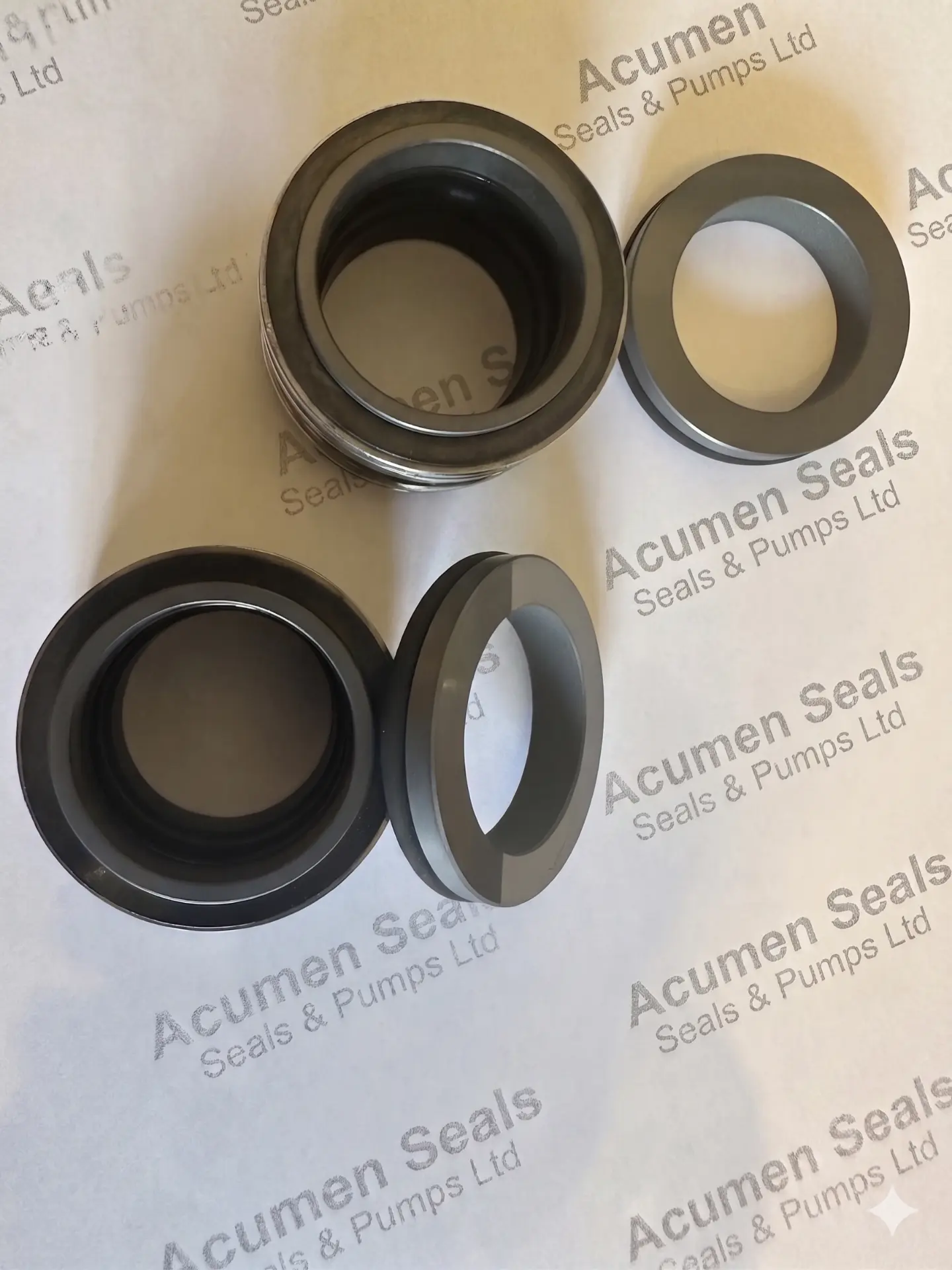
A component seal is selected as individual sealing parts rather than as a complete pre-set cartridge assembly. The rotating seal, stationary seat, secondary seals and setting dimensions must suit the equipment and operating duty.
Match more than the shaft diameter
Two seals with the same nominal shaft size can have different working lengths, seat dimensions, materials and operating limits. A similar-looking seal is not enough to confirm interchangeability.
The replacement needs to match the rotating assembly and stationary seat, the available installation space, and the equipment's required setting arrangement. Use the relevant equipment drawing and seal instructions where available.
What to send for identification
- Pump or equipment make, model and any drawing or part number.
- Shaft or sleeve diameter at the seal location.
- Photographs of the complete old seal, both faces, the stationary seat and any markings.
- Seat outside diameter, housing dimensions and the required working length, where known.
- Process fluid, concentration, normal and maximum temperature, pressure and speed.
- Cleaning fluids, steam exposure or other changes in duty.
- What happened before the seal was removed, including leakage, dry-running events or repeated failures.
If a dimension is unknown, say so. Do not estimate a working length from a damaged or uncompressed old seal and treat it as a confirmed setting dimension.
Choose the faces and secondary seals for the process
Face materials and secondary seals need checking together. Fluid chemistry, solids, temperature, pressure, lubrication and cleaning conditions can affect the choice. A carbon, silicon carbide, tungsten carbide or elastomer name does not establish that every combination suits the duty.
Food or pharmaceutical applications may also require specific material documentation. Confirm the requirement for the selected parts rather than assuming a general material description proves compliance.
Component seal or cartridge seal?
A like-for-like component replacement may be suitable when the existing arrangement and duty are established. A cartridge alternative can be considered where the equipment dimensions, access and support requirements allow it. Conversion is not automatic, and changing the seal does not by itself correct a pump or process problem.
If the last seal failed early
Keep the removed parts and record how the equipment was operating. The damage pattern, failure timing, process conditions and support arrangement can be more useful than ordering the same part again. Photographs can help start the review, but inspection or further measurements may be needed. See our Failure analysis guidance.
Watch: Single spring seals - why spring direction matters
From Andrew's Acumen Seals and Pumps YouTube channel.
Send the pump and seal details
Start with the information you have. We will check what is missing before recommending the replacement.
Free Troubleshooting Guide
Contact Acumen for our comprehensive seal diagnosis checklist
Download GuideComponent Seals Questions and Answers
What is a component mechanical seal?
A seal supplied as separate parts - rotary face, stationary seat and secondary seals - assembled onto the shaft piece by piece rather than as a pre-set unit.
When does a component seal make sense?
Where budgets are tight, on older equipment, and where a like-for-like part already exists. Per set they cost less than a cartridge and cover a huge range of sizes and duties.
What is the catch?
They must be set to the correct installed length during installation, against the equipment drawing or the setting dimensions we supply with the seal. Get that wrong and the seal is over-loaded or under-loaded and fails early.
Can you match my existing seal?
Yes. From the part number, the pump details or the seal itself, we identify the design and select and supply against your duty - we are independent, not tied to any manufacturer.
Ask about component seals
Send your pump or equipment details and Andrew will confirm the right component seal, or tell you when a simpler option will do.