What causes a mechanical seal to fail prematurely?
The four most common causes are incorrect installation, running dry, wrong elastomer for the fluid chemistry, and operating outside the seal's design parameters for temperature or pressure. In our experience across 36 years, incorrect elastomer selection, particularly using NBR or EPDM where FFKM is required, accounts for a significant proportion of early failures in chemical and pharmaceutical applications. The SCAN method (Symptom, Cause, Answer, Next Step) is the fastest way to diagnose a failure correctly.
What is the difference between a cartridge seal and a component seal?
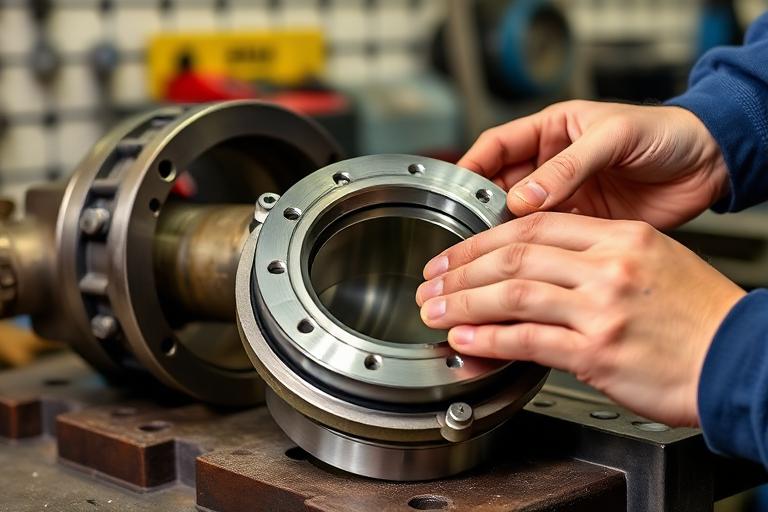
A cartridge seal is a pre-assembled, self-contained unit supplied as a single piece. It eliminates the need for precise measurement during installation, reducing human error. A component seal consists of individual parts, seal head, seat, and secondary sealing elements, assembled on-site. Component seals are typically lower cost but require more skill and care to install correctly. For critical applications or where maintenance resources are limited, cartridge seals are the preferred choice.
When should I specify FFKM (perfluoroelastomer) over FKM?
FFKM should be specified when the fluid contains aggressive chemicals that degrade FKM, including ketones, esters, steam above 200°C, strong acids, and certain amines. FFKM offers near-universal chemical resistance and is the correct choice for pharmaceutical CIP/SIP processes, semiconductor manufacturing, and defence applications governed by DEF-STAN 02-337. It costs significantly more than FKM, so the decision should be based on fluid compatibility data and operating temperature, not on price alone.
What does API 682 mean for mechanical seal selection?
API 682 is the industry standard for mechanical seals used in centrifugal and rotary pumps in the petroleum, petrochemical, and natural gas industries. It defines seal categories, types, and arrangements, and specifies the piping plans (flush plans) that must accompany each configuration. Specifying to API 682 ensures the seal is suitable for the duty, that the flush arrangement maintains correct face conditions, and that the seal will meet the expected MTBF targets set by operators. Independent consultants familiar with API 682 can significantly reduce the risk of incorrect specification.
How quickly can Acumen supply an emergency replacement seal?
For standard cartridge seals and common configurations, we can usually source and despatch within 24 to 48 hours. For specialist or custom seals, lead time depends on the manufacturer and configuration. Contact us directly on 07767 842601 with the pump make, model, and shaft size and we will confirm availability immediately.
What industries does Acumen Seals & Pumps serve?
We work across chemical processing, pharmaceutical, oil and gas, power generation, water treatment, food and beverage, and defence. Our defence work includes supply to specifications governed by DEF-STAN 02-337. Our pharmaceutical work covers FDA-compliant and USP Class VI elastomer selection. We also supply bead mill seals for pigment and ink manufacturing, an application that demands exceptional abrasion resistance and precise face load calculation.
Why does my mechanical seal keep failing on the same pump?
Repeated mechanical seal failure on the same pump typically indicates an unresolved root cause in the operating environment rather than a problem with the seal itself. The most common causes are: process fluid temperature running above the elastomer's rated limit, causing compression set and loss of sealing force in FKM or EPDM O-rings; shaft axial movement exceeding the seal's designed compensation range, causing dynamic O-ring extrusion and face misalignment; and incorrect flush plan configuration introducing particulate, crystallising fluid, or high-temperature process fluid directly to the seal faces. Before specifying a replacement, a reliable diagnosis requires four pieces of information: the actual running temperature at the seal chamber; measured shaft movement at the stuffing box under operating load; confirmation of what fluid is being delivered to the seal faces through the flush arrangement; and physical inspection of the failed seal to identify the specific failure mode. In most cases this information is available on site and has not been collected. Without it, a replacement seal is likely to fail for the same reason as its predecessor. Acumen Seals & Pumps provides independent seal failure diagnosis and specification review.