
What Are Cryo-Ring™ Seals? The Complete Guide for -250°C Applications
Quick Answer:
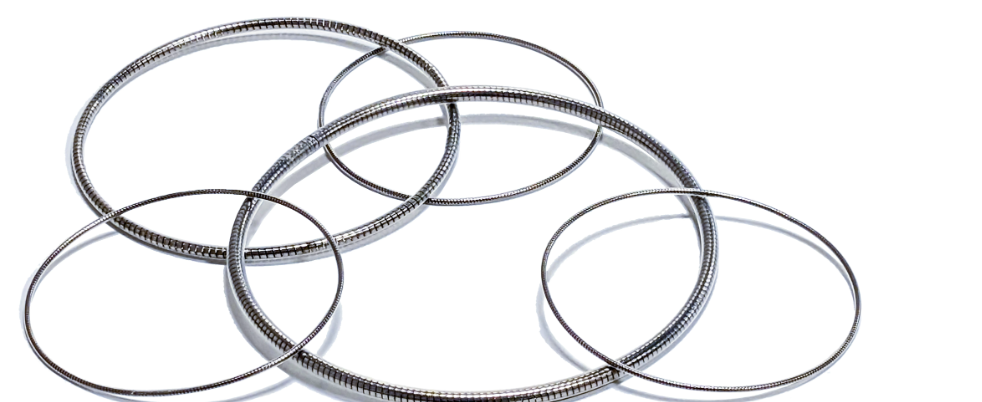
Cryo-Ring™ seals are specialized FEP/PFA encapsulated seals designed to maintain reliable sealing performance at extreme cryogenic temperatures down to -250°C, where ordinary elastomers become brittle and fail.
Why Do Standard Seals Fail in Cryogenic Applications?
Here's the problem: when temperatures drop below -50°C, standard elastomers lose their flexibility. They become hard, brittle, and crack under pressure. This leads to catastrophic seal failure, costly downtime, and potential safety hazards in critical applications like LNG processing or medical equipment.
How Do Cryo-Ring™ Seals Solve This Problem?
Key Design Features:
- Performs reliably at -250 °C
- Custom sizes and cross-sections available
- Stainless steel spring core prevents cold flow
- Stocked in standard sizes for fast delivery
The Science Behind the Solution
Cryo-Ring™ seals use a dual-material approach: an inert FEP or PFA outer jacket provides chemical resistance and maintains flexibility at ultra-low temperatures, while a precision-engineered stainless steel spring core prevents "cold flow", the tendency for materials to deform permanently under cryogenic conditions.
Which Industries Need Cryogenic Seals?
Primary Applications:
- • LNG processing and transport
- • Medical equipment (MRI systems)
- • Food processing (nitrogen freezing)
- • Aerospace fuel systems
Specialized Uses:
- • Chemical processing plants
- • Research laboratories
- • Semiconductor manufacturing
- • Superconducting systems
What Makes Cryo-Ring™ Seals Different from Standard O-Rings?
| Feature | Standard O-Rings | Cryo-Ring™ Seals |
|---|---|---|
| Temperature Range | Limited to -40°C typical | Down to -250°C |
| Cold Flow Resistance | Poor - deforms permanently | Excellent - steel spring core |
| Chemical Compatibility | Limited by elastomer type | Inert FEP/PFA jacket |
Frequently Asked Questions About Cryogenic Sealing
Q: Can I use standard Viton or EPDM seals for cryogenic applications?
A: No. Standard elastomers become brittle and crack at extreme low temperatures. Even "low-temperature" grades typically only work to -40°C to -60°C, nowhere near cryogenic ranges.
Q: How long do Cryo-Ring™ seals last in service?
A: Service life depends on application conditions, but properly selected Cryo-Ring™ seals typically outlast standard elastomers by 5-10 times in cryogenic service due to their resistance to cold flow and thermal cycling.
Q: Are custom sizes available for unique applications?
A: Yes. We manufacture custom cross-sections, diameters, and specialized profiles to meet specific application requirements. Lead times vary based on complexity.
Q: What's the difference between FEP and PFA encapsulation?
A: Both offer excellent cryogenic performance. PFA has slightly better mechanical properties and higher temperature capability, while FEP offers superior chemical inertness. We select the optimal material based on your specific application requirements.
⚠️ Expert Warning: Common Specification Mistakes
Many engineers underestimate the challenges of cryogenic sealing. Don't specify standard materials for extreme temperature applications. Always consult with cryogenic sealing specialists before finalizing your design specifications.
About the Author
Andrew Sykes MCGI has 36 years of hands on experience in mechanical seal design, manufacturing, and application engineering. He specialises in extreme service conditions including cryogenic, high-temperature, and chemically aggressive environments.