
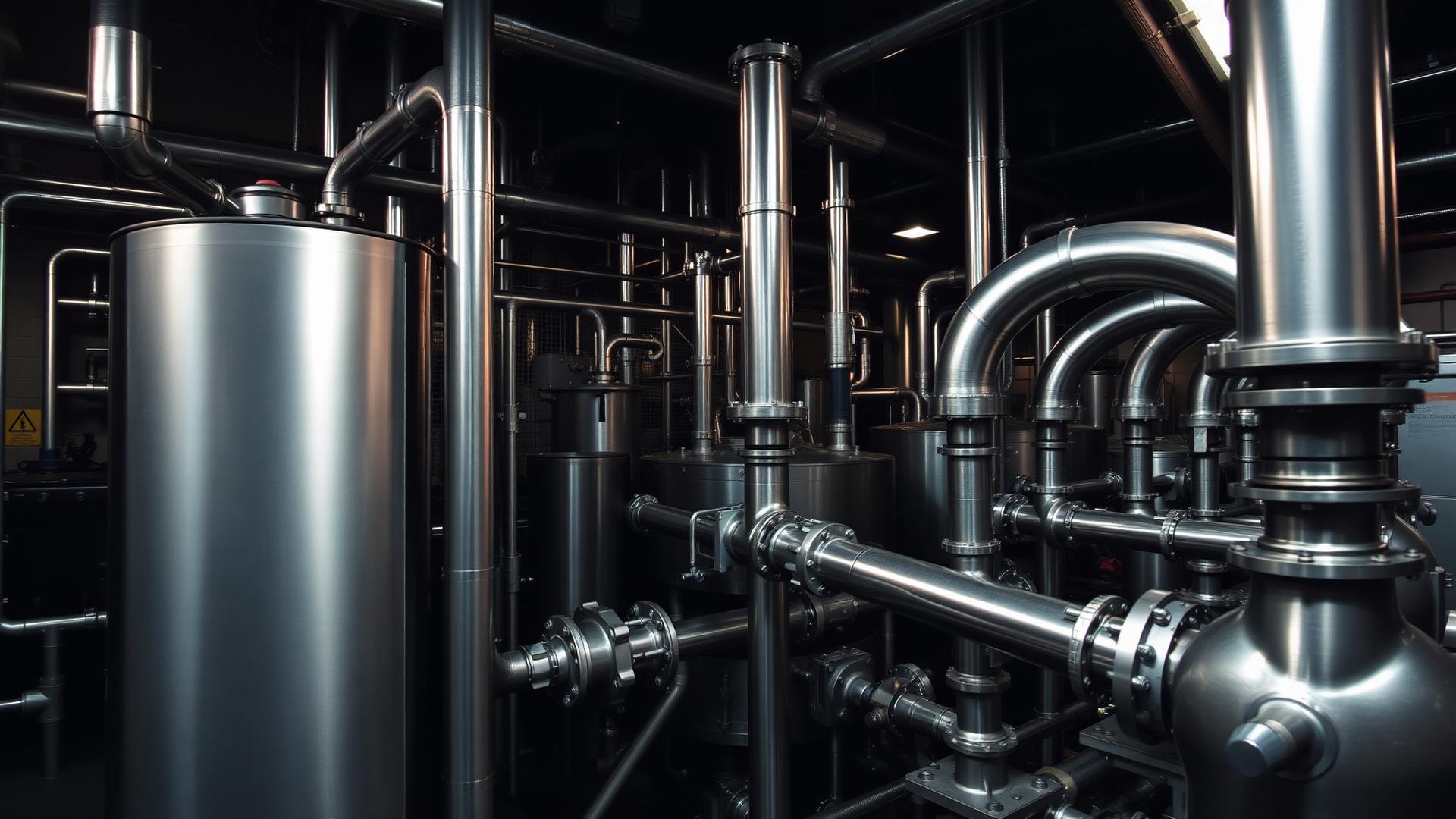
FFKM Perfluoroelastomer O-Rings
When FKM keeps failing, FFKM is usually the answer: extreme chemical resistance, temperature capability up to 350°C depending on compound, and over 1,800 compatible media, specified by an engineer with 36 years of elastomer experience.
Why FFKM Instead of FKM?
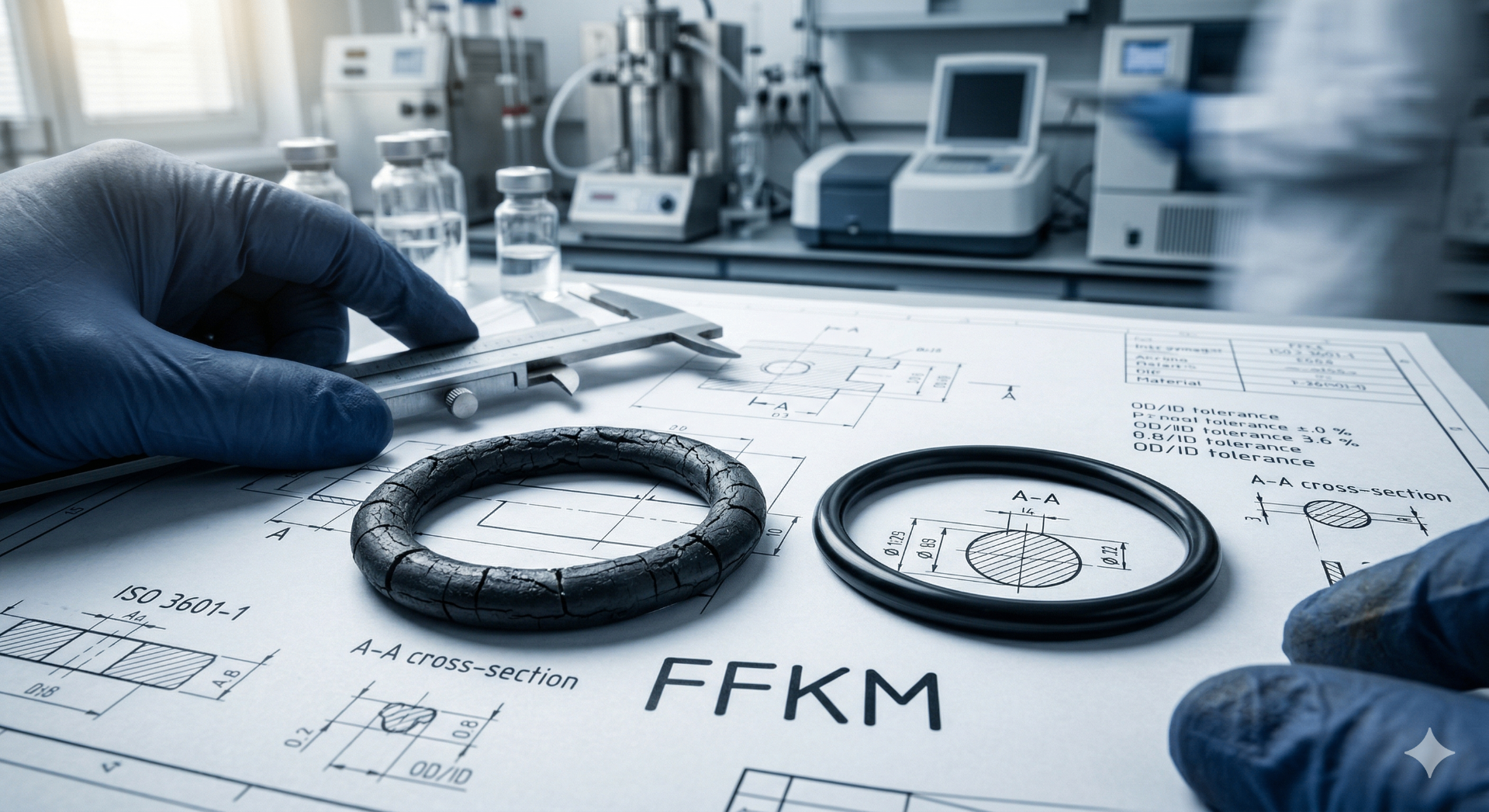
FKM fluoroelastomer is excellent within its operating envelope, around 200°C, good resistance to fuels and oils. But process conditions change. Cleaning cycles, flush media, and evolved chemistry create vulnerabilities that FKM wasn't designed to handle.
FKM Limitations
- ✗Max ~200°C continuous
- ✗Vulnerable to steam above 150°C
- ✗Attacked by primary amines, ketones, low MW esters
- ✗Swells and extrudes in aggressive solvents
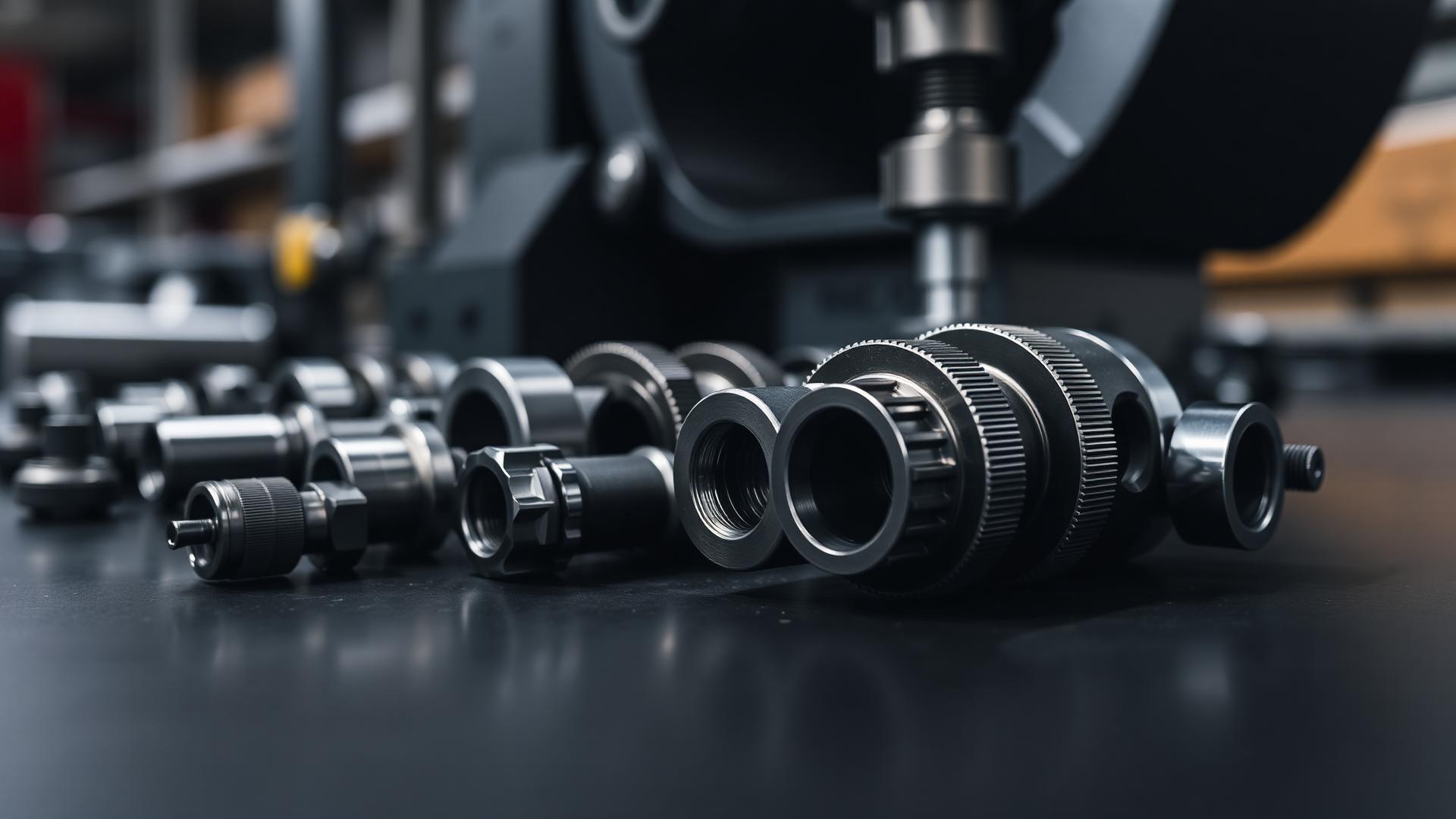
FFKM Advantages
- ✓325°C continuous service
- ✓Over 1,800 compatible media
- ✓Resists virtually all industrial chemicals
- ✓Dimensional stability under thermal cycling

Key Benefits
Industry Applications
Chemical Processing
Aggressive solvents, acids, and caustics at elevated temperatures where FKM fails prematurely.
Pharmaceutical & Food
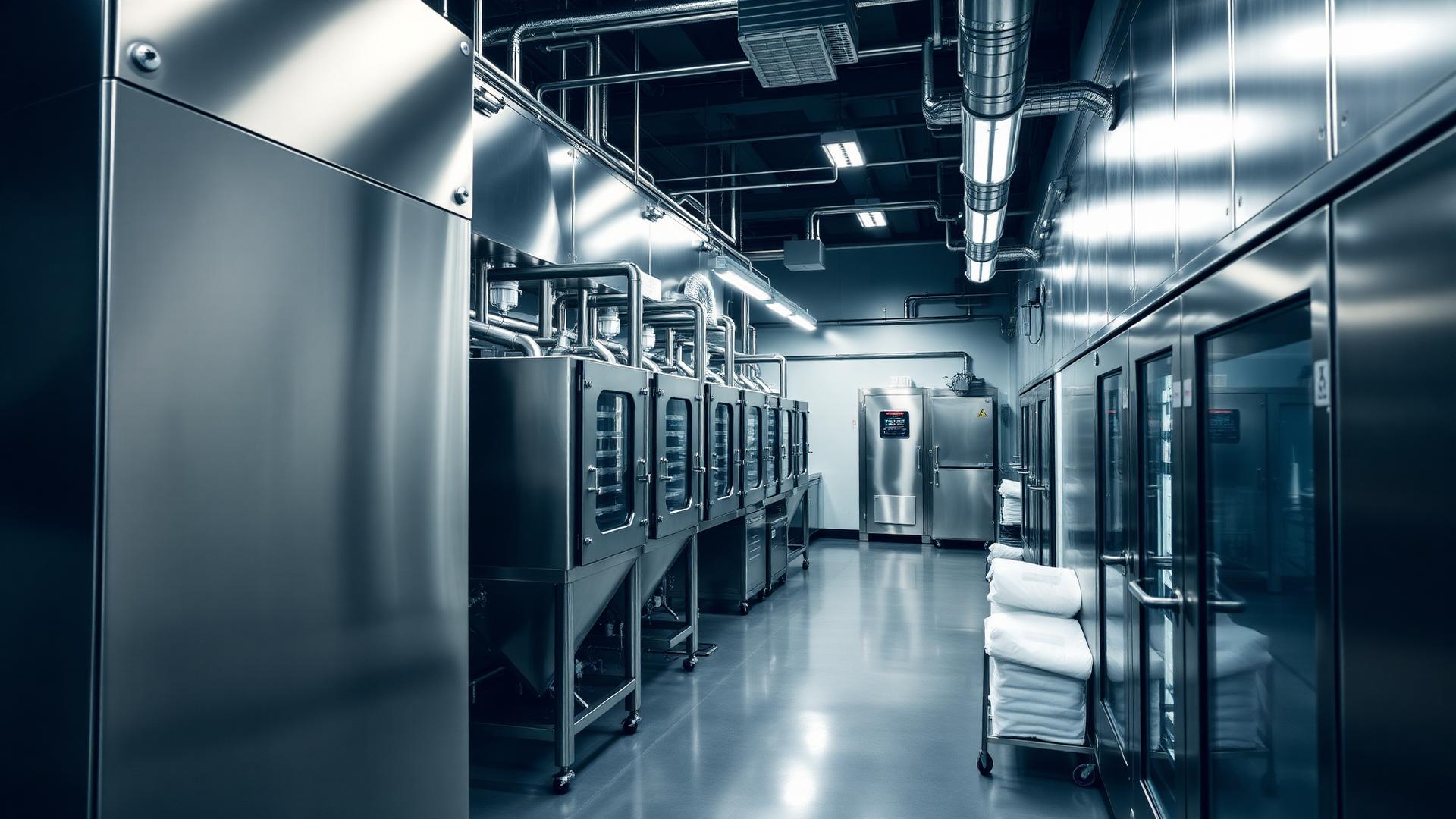
CIP/SIP cycles, steam sterilisation, and FDA-compliant sealing in clean environments.
High-Temperature Plant
Thermal cycling, hot oil systems, and process conditions above 200°C where FKM reaches its limit.
FFKM Compound Range Supplied by Acumen
FFKM perfluoroelastomers combine the chemical resistance of PTFE with the flexibility and elasticity of FKM. Acumen supplies these grades and helps match them to aggressive chemicals, extreme temperatures, plasma, vacuum, HPHT and clean-process duties.
Extreme Conditions
Built for services where aggressive chemicals, heat, plasma, vacuum or HPHT conditions push standard elastomers beyond their limits.
Wider Temperature Window
The FFKM range covers duties from low-temperature grades down to -46°C through high-temperature applications up to +350°C.
Clean Manufacturing
Clean-room production supports semiconductor, food and beverage, chemical process and pharmaceutical applications requiring cleanliness and purity.
| ORINGONE Compound | Hardness | Colour | Temperature Range | Equivalent To | Best Fit |
|---|---|---|---|---|---|
| FFKM EZTRA® 75 BLACK HT300 (Z001) | 75 IRHD | Black | -15°C to +300°C | Kalrez 4079, Chemraz 555, Perlast G70H | High-temperature workhorse grade for aggressive process duties. |
| FFKM EZTRA® 75 BLACK HT320 (Z002) | 75 IRHD | Black | -10°C to +320°C | Kalrez 7375, Chemraz 615, Isolast J8325, Perlast G75B / G75TX | Highest temperature capability in the range, for extreme thermal service. |
| FFKM EZTRA® 75 BLACK CH FDA (Z003) | 75 IRHD | Black | -20°C to +275°C | Kalrez 6375 / 6230, Chemraz SD652 / 605, Isolast J9515plus, Perlast G70A / G75M | Chemical-resistant FDA grade for process and hygienic duties. |
| FFKM EZTRA® 75 BLACK LT46 (Z006) | 75 IRHD | Black | -46°C to +240°C | Kalrez 0040, Chemraz 566LT / 564LT, Perlast G75LT | Low-temperature grade where cold flexibility matters as much as chemistry. |
| FFKM EZTRA® 80 BLACK CH (Z008) | 80 IRHD | Black | -20°C to +275°C | Application specific, ask for a cross reference | Higher-hardness chemical grade for higher pressure or extrusion-prone grooves. |
| FFKM EZTRA® 60 BLACK CH (Z009) | 60 IRHD | Black | -20°C to +275°C | Application specific, ask for a cross reference | Softer chemical grade for low-load sealing and delicate flange faces. |
| FFKM EZTRA® 90 BLACK HT300 (Z011) | 90 IRHD | Black | -10°C to +300°C | Kalrez 7390, Chemraz 694, Isolast J9509 | Hard, high-temperature grade for high-pressure dynamic and static duties. |
| FFKM EZTRA® 90 BLACK ED (Z012) | 90 IRHD | Black | -15°C to +260°C | Kalrez 0090, Chemraz 526, Isolast J9513, Perlast G92E | Explosive decompression resistant grade for oil and gas service. |
| FFKM EZTRA® 90 BLACK ED LT46 (Z013) | 90 IRHD | Black | -46°C to +220°C | Chemraz 678, Perlast G90LT | Explosive decompression resistance with low-temperature capability. |
| FFKM EZTRA® 75 WHITE HT275 (Z022) | 75 IRHD | White | -10°C to +275°C | Kalrez 7275, Perlast G74S / G75S | White high-temperature grade for clean and visual-inspection processes. |
| FFKM EZTRA® 75 WHITE CH FDA (Z023) | 75 IRHD | White | -20°C to +260°C | Kalrez 6380, Chemraz 504 / 585, Isolast J9516plus, Perlast G76W | White FDA grade for food, beverage and pharmaceutical sealing. |
Kalrez®, Chemraz®, Isolast® and Perlast® are trademarks of their respective owners and are listed for cross reference only. FFKM EZTRA® compounds are manufactured by ORINGONE S.r.l. and supplied in the UK by Acumen Seals & Pumps.
Clean Process
FDA, BfR, USP VI and food-contact options for pharmaceutical, food and beverage sealing.
Temperature Extremes
Grades covering low-temperature flexibility down to -46°C and high-temperature service up to +320°C.
Harsh Chemistry
Options for steam, hot water, amines, aggressive solvents, high-purity and plasma environments.
Is the Legacy Brand Always the Answer?
FFKM is no longer a single-brand market. Well-engineered perfluoroelastomer compounds from multiple manufacturers now match the chemical resistance and thermal performance of premium branded options, often at a fraction of the cost. If your approved vendor list hasn't been reviewed recently, it's worth asking the question.
Read: Legacy Brand vs FFKM AlternativesFFKM O-Ring Troubleshooting Guide
Even the highest-performing elastomer can fail if specified or installed incorrectly. Here's how to identify and resolve common FFKM O-ring issues.
Premature Hardening & Cracking
Symptoms: Brittle seal faces, surface cracking, loss of elasticity
Causes: Exceeding the compound's continuous temperature rating, or selecting a general-purpose FFKM grade for extreme thermal cycling
Solution: Verify the specific FFKM compound's Tmax, not all FFKM grades are rated to 325°C. Match the compound to your peak and continuous temperatures.
Compression Set Failure
Symptoms: O-ring remains deformed after removal, leakage under pressure
Causes: Sustained high temperature combined with excessive squeeze, or wrong compound for thermal cycling duty
Solution: Select a low compression-set FFKM grade. Review gland dimensions, FFKM may require tighter groove tolerances than FKM.
Chemical Swell or Softening
Symptoms: Swollen seal, extruded material, loss of sealing force
Causes: While FFKM resists 1,800+ media, certain specialty solvents or mixed chemical streams can attack specific FFKM grades
Solution: Request immersion testing data for your exact process fluid. Not all FFKM compounds are equal, compound selection is critical.
Rapid Gas Decompression (RGD)
Symptoms: Blistering, internal voids, surface rupture after pressure drop
Causes: High-pressure gas (CO₂, H₂S, methane) permeating the elastomer, then expanding rapidly on depressurisation
Solution: Specify an RGD-resistant FFKM compound. Standard FFKM may not be suitable for oil & gas high-pressure gas service.
Installation Damage
Symptoms: Nicks, cuts, pinched seal, immediate leakage on start-up
Causes: FFKM is stiffer than standard elastomers. Sharp groove edges, inadequate chamfers, or forcing the O-ring over threads
Solution: Ensure chamfered lead-ins, use assembly lubricant compatible with FFKM, and avoid stretching beyond 5% of ID during installation.
CIP/SIP Cycle Degradation
Symptoms: Seal degradation during clean-in-place or steam-in-place cycles in pharmaceutical or food plant
Causes: Alternating between aggressive cleaning chemicals and superheated steam creates combined chemical-thermal stress
Solution: Use a CIP/SIP-rated FFKM compound specifically formulated for repeated sterilisation cycles. Standard FFKM grades may not handle the cycling.
Need Help Diagnosing an FFKM Failure?
Send us your failed seal, we'll assess the failure mode and recommend the correct FFKM compound for your application. No charge.
Request Free Failure AnalysisFFKM O-Ring FAQs
What is FFKM and what does it stand for?
FFKM stands for perfluoroelastomer. It is the highest-performing elastomer seal material available, offering near-total chemical resistance and continuous operating temperatures up to 325°C. FFKM is used in mechanical seals, O-rings, and gaskets across chemical, pharmaceutical, and high-temperature applications.
What is the difference between FFKM and FKM O-rings?
FKM (fluoroelastomer/Viton®) handles temperatures up to ~200°C and resists fuels and oils. FFKM withstands 325°C continuous and resists over 1,800 chemicals including aggressive solvents, acids, steam, and amines that attack FKM. FFKM costs more but lasts significantly longer in harsh environments.
Is FFKM the same as a legacy brand of FFKM?
FFKM is a material class, not a brand. One legacy brand dominated the market for years, but multiple manufacturers now produce equivalent FFKM compounds with comparable chemical resistance and temperature performance, often at lower cost. Read our full analysis. See also our complete FFKM and perfluoroelastomer guide.
Where are FFKM O-rings used?
FFKM O-rings are used in chemical processing, pharmaceutical manufacturing, semiconductor fabrication, oil & gas, food processing (CIP/SIP cycles), and any application involving aggressive chemicals or high temperatures above 200°C.
Can I get FFKM O-rings in custom sizes?
Yes. Acumen Seals supplies FFKM O-rings in standard AS568 and metric sizes, plus custom dimensions. We provide a free material assessment to recommend the right FFKM grade for your specific application.
O-Ring Sizing Questions
Why does a replacement O-ring feel loose even though I measured the worn part carefully?
Compression set and long term compound swell can both distort a used ring's dimensions, so a direct measurement of a worn part may not match its original spec. Cross checking your measurement against the AS568 size chart or metric equivalent helps confirm the intended size rather than the current, deformed one.
Why do two O-rings with the same cross section not interchange?
Cross section alone does not define a size, ID and OD have to match as well. Two rings can share a 0.139 inch cross section and still be entirely different dash numbers with incompatible diameters.
Why does a Parker part number not show up on a generic size chart?
Parker numbers often encode compound and packaging details in addition to dimensions, so the same physical size can appear under several different manufacturer part numbers. Cross referencing the dimensions directly is more reliable than matching part numbers alone.
Why does a metric O-ring not fit where an AS568 ring used to be installed, even at a close size?
Metric and AS568 sizes are built on different base units and preferred size tables, so a converted inch to millimetre size rarely lands on an exact metric standard size. Sourcing directly from the ISO 3601 metric O-rings chart avoids the small dimensional gaps that come from manual conversion.
Why is it risky to order based on a measured groove rather than the O-ring itself?
Groove dimensions are sized to produce a specific squeeze on the O-ring, not to match the O-ring's free state dimensions exactly. Measuring the actual O-ring, or confirming its original dash number, gives a more accurate order than reverse engineering a size from the housing.
The Salesperson Won't Tell You This
There are applications where FFKM is overkill.
PTFE-Encapsulated Seals
Chemically resistant to most aggressive media. No elastomer contact with the process fluid at all.
Highly Filled PTFE Compounds
Static sealing in extreme chemical environments. Outstanding at low stress, low temperature applications.
Specialist Fluoropolymer Blends
Engineered for specific process chemistries where perfluoroelastomer adds cost but not performance.
"FFKM earns its place in high-temperature dynamic sealing, aggressive solvents, steam, amines, semiconductor-grade cleanliness. 325°C continuous. Near-universal chemical compatibility. But specifying it everywhere is just as wrong as never specifying it."
The job is to match the material to the application, not to sell you the most expensive option on the shelf.
36 years in this industry. My value isn't knowing when to recommend FFKM.
It's knowing when not to.
Andrew Sykes MCGI, 36 Years Solving Seal Problems
No charge. Just a straight answer.
Related FFKM Reading
Legacy Brand vs FFKM Alternatives
Is the legacy FFKM brand on your approved vendor list because it's the best option, or because it's always been there?
FKM vs FFKM: Why Your Specification Needs Reviewing
Nobody gets fired for specifying FKM. But maybe they should ask why it keeps failing.
O-Ring Failure: Causes & Prevention
Understanding the common causes of O-ring failure and how to prevent them.
Large O-Rings
FFKM and seven other materials from 200.00mm internal diameter upwards, no dimension limits and no mould costs.
Encapsulated O-Rings
PTFE-encapsulated O-rings for applications requiring chemical resistance with elastomeric flexibility.
Ask about FFKM O-rings
Send your sizes, fluid and temperature and Andrew will confirm the right FFKM grade, or tell you when a cheaper material will do the job.
Free FFKM Material Assessment
If you're seeing premature seal failure or want to evaluate cost-effective FFKM alternatives, get in touch. No charge. I'll tell you whether a material change would solve it, or whether the answer lies elsewhere.
Andrew Sykes MCGI, 36 Years in Sealing