
Technology
Articles and insights related to technology in the mechanical seal industry.
Cold made the Challenger booster O-rings too slow to seal in 1986. The same physics can stick a pusher seal's sliding O-ring. What to check and specify.

A real job: a customer asked for a 35 mm seal, but the Gilkes 301-45 shaft wears a sleeve and the seal runs on 45 mm. Measure where the seal sits, not just the shaft.

Gland packing or a mechanical seal? Compare leakage, running costs, maintenance and reliability, and learn when each option makes sense for your pump.
Component or cartridge mechanical seal? What each one is, why installation decides so much of seal life, and when each suits your pump.
Single or double mechanical seal? What each arrangement does, when a single seal is enough, and when the duty calls for a double seal with barrier fluid.
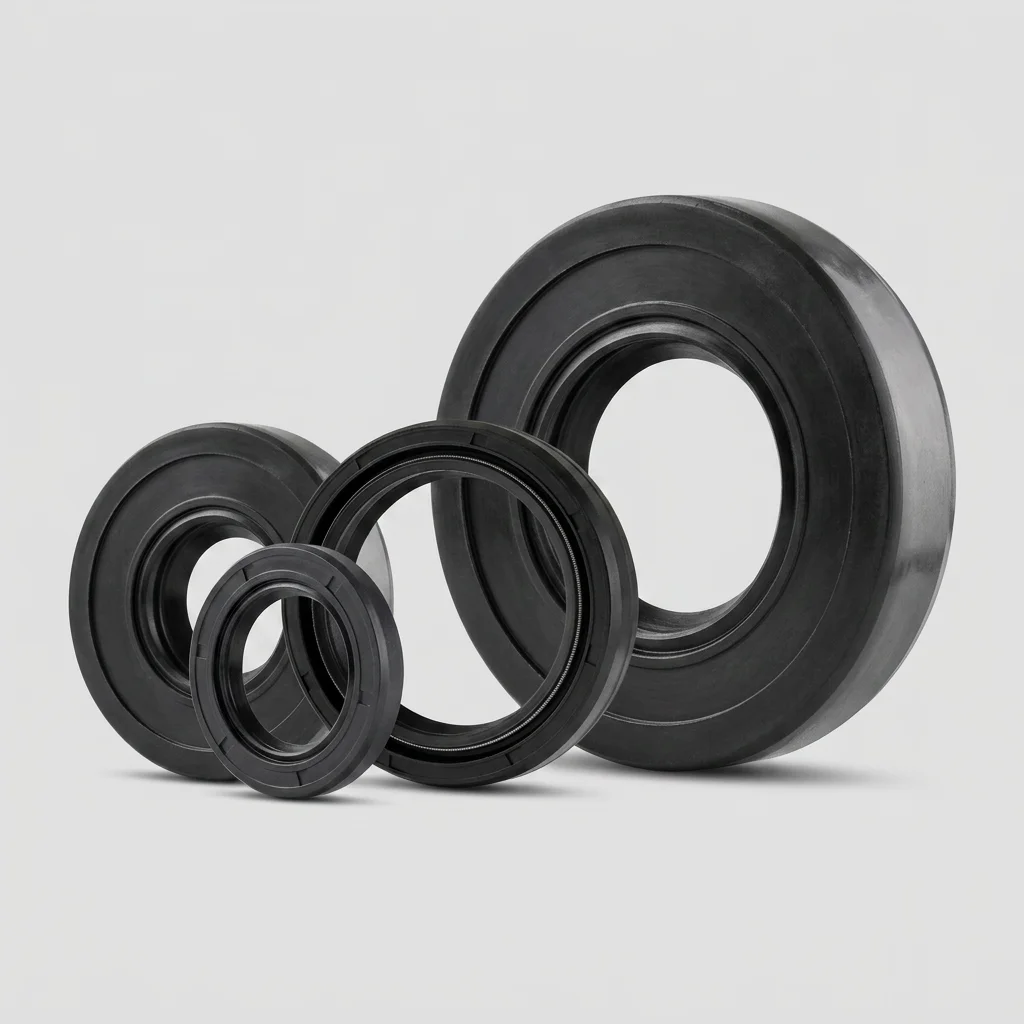
Lip seal, oil seal, rotary shaft seal, radial shaft seal. Four names, one component, and a lot of confusion when you are trying to order the right part. Here is what each term means and how to specify correctly.
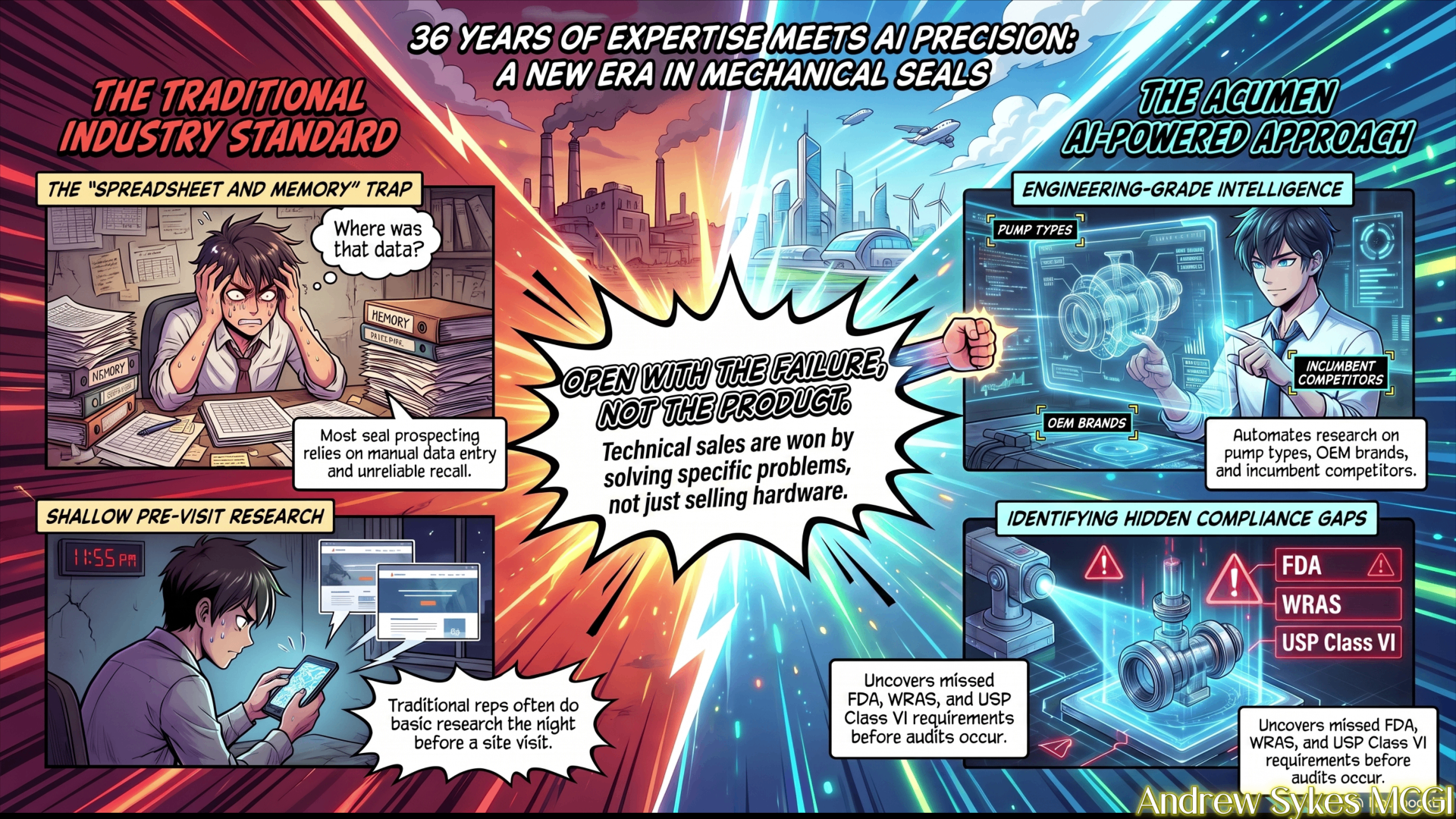
Andrew Sykes explains how his AI prospecting system ingests a plant's public footprint, deduces machinery and incumbent brands, and identifies hidden compliance gaps — so the sales call starts with a failure they have not had yet.

After investigating 1,500 seal failures, Andrew Sykes explains why the seal is rarely the root cause, why most leaks are decided before fitting, and the five root causes that show up every time.
Why does the same mechanical seal keep failing on the same pump? After 36 years investigating seal failures, the answer is almost never the seal itself. Here are the four root causes to check.
FFKM seals fail in chemical processing for three primary reasons: compound mismatch, thermal fatigue, and installation damage. Here is what to validate before specifying.

Most engineers know FFKM is expensive. Very few know why it works. Each letter in the ISO designation tells you exactly what you're dealing with, and why it outperforms standard elastomers.

Watch real-world chemical degradation in action. See why specifying the wrong elastomer isn't a cost saving, it's a liability. FFKM vs FKM under aggressive process conditions.

Why FKM seals keep failing in chemical, pharmaceutical and high-temperature plant, and when FFKM is the right upgrade, from 36 years of failure analysis.

Do FFKM alternatives deserve a place on your approved vendor list? A 36-year view on specifying perfluoroelastomer seals beyond the legacy brand.

Dr. Ashok Punde explains how heat accelerates seal failure, covering elastomers, faces, metals, chamber dynamics, and mitigation strategies for industrial applications.

Guide to the Q1/Q1VMG cartridge seal design for Salvatore Robuschi PB 200 pumps: operating parameters, materials and application conditions.

Discover how mastering mindset can transform sales performance. Learn the 3 planes of achievement, how to build self-trust, and why high-leverage actions drive results.

Common causes of O-ring failure and how to prevent them: abrasion, chemical attack, compression set and more, from 36 years solving sealing problems.

How to troubleshoot, categorise and prevent mechanical seal failures: a 3-part framework that helps reduce downtime, cost and stress.

Discover how O-rings seal under pressure, why rubber compression matters, and how to prevent leaks in static and dynamic sealing applications.

How excessive temperature destroys mechanical seals: lubrication loss, vaporization, elastomer damage and coking, with prevention strategies.
Mechanical seals are critical components in pumps and rotating equipment, preventing leaks, reducing maintenance costs, and improving reliability. In this video, we explain the fundamentals of mechanical seals, why they fail, and how to choose the right solution for your business.

Hidden factors that damage mechanical seals: thermal intrusion, particle invasion, vibration, chemical attack and pressure spikes, and how to prevent them.

The 20 most-asked questions about mechanical seals, from how they work to why they fail, answered by Andrew Sykes MCGI.

Inside the Seal: Supporting a Mixer Manufacturer with FDA-Approved PTFE Seals for Over 20 Years
FDA-compliant PTFE seals for a mixer OEM we have supported for over 20 years: installation, material compliance and food safety.

Case study: replacing packing on a Salvatore Robuschi HGM32-16B168-351 pump with a cartridge mechanical seal. Zero leakage, lower energy.

Retrofitting Salvatore Robuschi pumps with new cartridge seal technology, replacing legacy single spring seals to improve reliability and cut maintenance.

Discover the 2025 expert guide to mechanical seals. Learn how they work, their advantages, disadvantages, and best practices for installation and maintenance.

Comprehensive guide to FDA-approved mechanical seals for food processing and pharmaceutical applications, featuring EHEDG-compliant designs and sterile sealing solutions.

Andrew Sykes, a mechanical seal expert with 36 years of experience, shares how to identify thermal damage in seals and prevent costly failures.

Mechanical seal material selection: chemical compatibility, temperature limits, and common materials from silicon carbide to advanced elastomers.

Understanding thermal damage in elastomers is crucial for mechanical seal reliability. Learn to identify signs, root causes, and prevention strategies to extend seal life and reduce costly failures.

How mechanical seals prevent leaks and keep rotating equipment running safely across manufacturing, oil and gas, pharmaceuticals and wastewater treatment.

Repeated mechanical seal failures? Check the operating duty, seal condition and support system before choosing another replacement. Practical fault-finding guidance.

Mechanical seals are invisible most of the time, but they keep your pumps, compressors and rotating equipment running safely.

How a mechanical seal keeps fluid in your pump: faces, springs and secondary seals in plain English, plus the signs it is failing and when to replace it.

10 Most Frequently Asked Questions About Mechanical Seals - Answered by a 36-Year Industry Expert
Expert answers to the most-asked mechanical seal questions, with practical insights that save plants time, cost and repeat failures.

The Acumen A139S mechanical seal, fully interchangeable with Grundfos CRN15 and CRN20 pump models: supplied by Acumen Seals & Pumps Limited.

The job a mechanical seal does on a pump, in plain terms: what the faces do, why the flush matters, and what normal wear looks like.

Learn about the causes, consequences, and prevention strategies for dry running in mechanical seals, one of the most severe and preventable failure modes in sealing systems.

This in-depth article breaks down the exact system I created, CRITICO™, to help individuals and teams consistently build clear, structured, and low-hallucination prompts for any AI model.

Discover the emerging technologies and innovations shaping the mechanical seal industry in 2025 and beyond.

Our comprehensive guide to selecting the optimal mechanical seal based on your specific application requirements and operating conditions.